
Furniture packaging should be discussed while the order and destination are being defined, not only when a shipment is ready. A villa project may combine upholstered seating, tables, cabinetry components and delicate finishes. These items can require different protection and handling arrangements. The specific packing method should be agreed for the products and transport route.
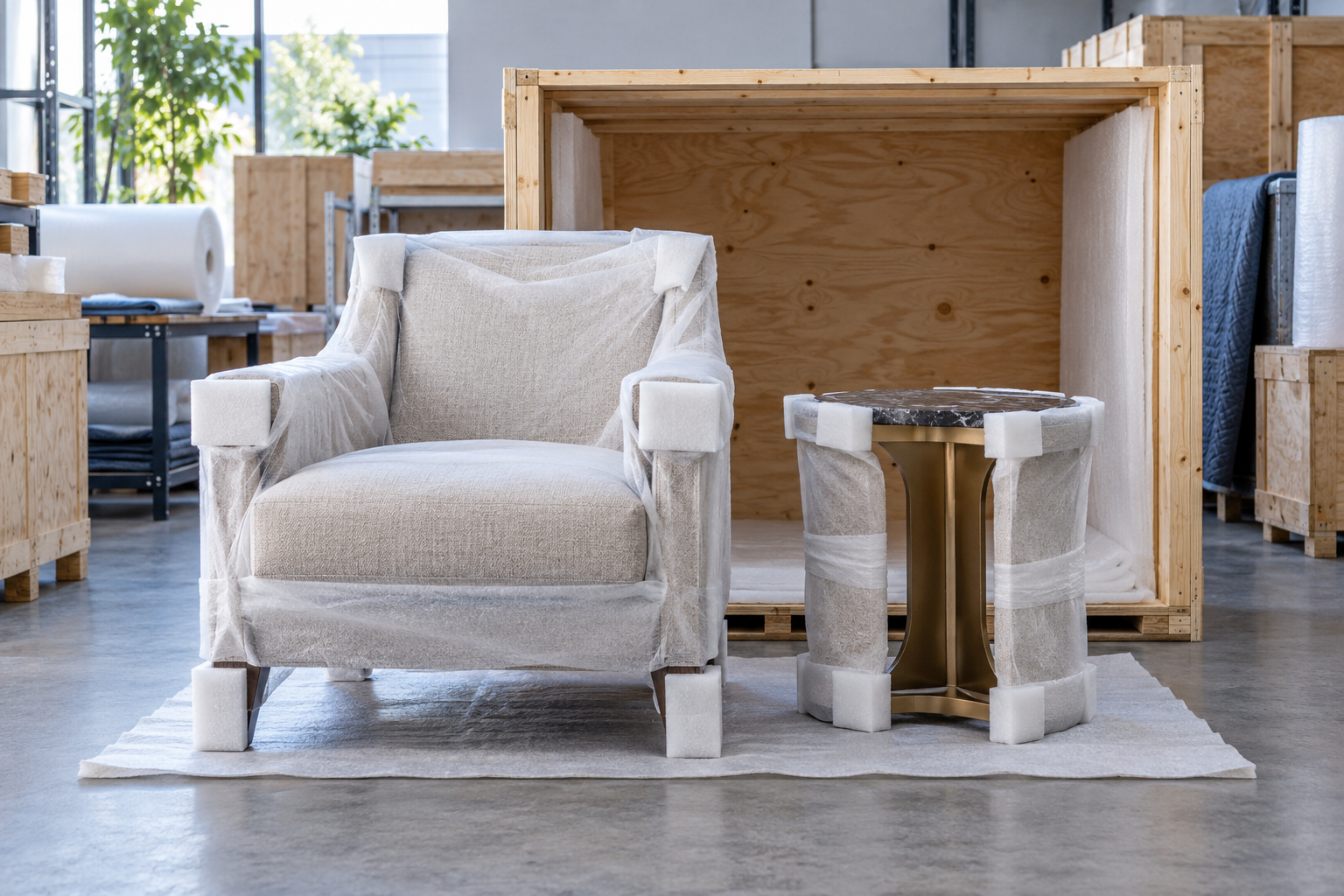
Identify every piece clearly
Connect package labels to the item IDs and room names in the approved furniture schedule. If a piece has detachable parts, identify how the components relate to the main item. A packing list should help the receiving team check what arrived without opening every package at once. Confirm any language, label format or document requirements for the destination in advance.
Match protection to the product
Discuss surface wraps for polished or upholstered areas, protection for corners and edges, and separation between parts that could rub against each other. Glass, stone, metal finishes and loose hardware may need special handling. Protective materials should suit the finish and not leave marks or residues. A photograph of a previous package is a useful reference, but it is not a specification for every item.
Decide when crating is needed
A wooden crate or additional outer protection may be appropriate for selected pieces, subject to their size, fragility, shipping method and receiving conditions. Clarify which items are crated, whether there are access or lifting constraints, and who will manage any destination requirements affecting the packaging. Do not assume all furniture will use the same construction or outer layer.
Plan for the destination
Share the project city, delivery point and known receiving limitations. Narrow doors, lifts, stairs or restricted unloading areas can influence how a product is divided and packed. Confirm who will receive, inspect, store and move packages after arrival. Shipping terms, transport and any on-site services must be agreed in the quotation and contract.
Check the record before dispatch
The agreed packing list should align with the approved quantities and item references. Ask what inspection records or photographs will be available for the order, and how exceptions will be documented. Packaging reduces handling risks but cannot guarantee that damage will never occur in transit. A clear record supports receiving checks and follow-up if a problem is found.
For the product information that feeds the packing list, start with drawings and room schedules.
Discuss packing requirements early
Send your project inquiry with the destination, product categories, approximate quantities and known receiving conditions. If you have packing or documentation requirements, share them with [email protected] for review.